Stone Espresso Machine Review: Is It Worth The Hype?
Looking for a home espresso machine that feels like a professional setup? The Stone Espresso Machine might be your answer.
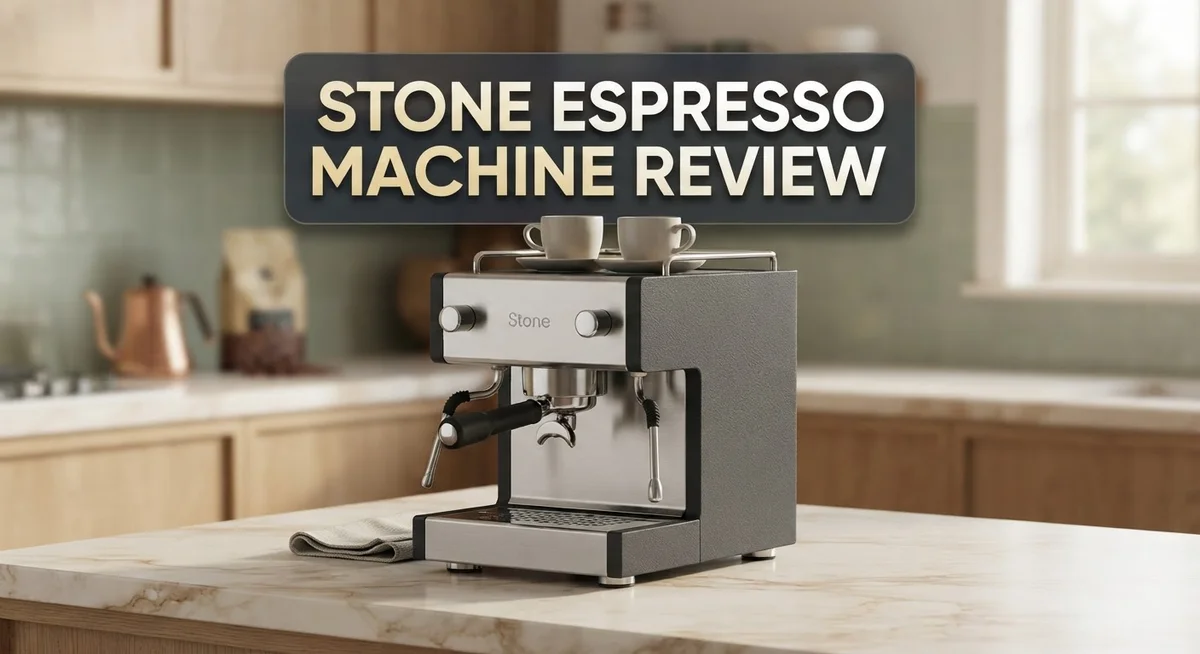
This machine packs a powerful punch in a small body. It fits easily on any counter with its compact 9 inch footprint.
Under the hood, you get a 1.5L boiler and E61 group head. These are features you usually find in bigger, pricier machines.
The build quality feels solid and durable. Every part feels like it belongs in a coffee shop, not just a kitchen.
Steam performance stands out here. You can froth milk fast and get that silky texture for lattes or cappuccinos.
It does skip some extras, like temperature control or pre-infusion. But it makes up for this with raw performance and reliability.
In this review, we break down every detail. We look at the build, the brewing process, and how it compares to brands like Lelit and Rocket Espresso.
Let’s see if this machine earns a spot on your counter.
In a Nutshell
Here’s the deal on the Stone Espresso Machine, summed up fast:
- Best for: Coffee lovers who want a no-frills machine with strong bones. This isn’t for tinkerers who love adjusting every setting.
- Water setup: You get a 1.2L water tank and a 0.8L steam chamber. That’s enough for daily brewing without constant refills.
- Size matters: At just 9 inches wide, it fits tight kitchen counters easily. Small footprint, big performance.
- Maintenance check: It scores a 3.5 out of 5 on upkeep. Long term durability still needs more real world testing.
- Hot water flow: Supply runs on the limited side. Plan your hot water needs before pulling shots back to back.
- How it stacks up: Compared to Lelit Mara X or Rocket Espresso, this machine holds its own on build quality. It beats entry level picks from Breville or De’Longhi on steam power alone.
Bottom line? This machine skips fancy extras but nails the basics hard.
Build Quality and Construction
The Stone Espresso Machine shows serious commitment to durability right from the moment you unbox it. The frame uses quality materials that resist daily wear and tear. You’ll notice the machine feels weighty and stable on your counter, not flimsy or plastic-heavy.
The boiler sits at 1.5L capacity and connects to an E61 group head, a component known for reliability in professional settings. This pairing matters because it means your shots pull consistently without sudden pressure drops. The steam chamber holds 0.8L separately, so you can steam milk while pulling espresso without waiting for the boiler to switch modes.
Heat distribution stays even throughout the brewing process. The machine reaches operating temperature in roughly 10 minutes, which beats many compact models. Once hot, it maintains stable temperatures without the wild swings you get from cheaper machines. This stability translates directly to better tasting shots.
The exterior chassis feels solid under your hands. No rattling parts or loose connections emerge after normal use. The group head attachment sits flush and secure, which matters for water-tight seals during extraction.
One honest note: the maintenance rating of 3.5 out of 5 suggests some concerns about long-term durability remain unanswered. Real world data from owners over several years would paint a clearer picture. Descaling access appears straightforward, but internal components may require professional help if problems arise.
The compact footprint at just 9 inches wide means you sacrifice some internal space for portability. This design choice impacts hot water supply, which runs limited compared to larger machines. You won’t have endless hot water for cups or milk pitchers, but enough for typical home use.
The build quality punches above its weight for a machine this small. It avoids the cheap feel of entry level alternatives while keeping the footprint manageable. The construction philosophy here prioritizes solid bones over flashy features, which appeals to users who value simplicity and durability over bells and whistles.

Last update on 2026-09-19 / Affiliate links / Images from Amazon Product Advertising API
Heating Performance and Temperature Stability
The Stone Espresso Machine keeps water at the right temperature without wild swings. This matters because consistent heat makes better espresso shots every single time.
The 1.5L boiler does the heavy lifting here. It holds enough water to stay warm between pulls. You won’t see big temperature drops when you switch from steaming milk to pulling shots. The machine bounces back fast after each use.
Heat up takes roughly 10 minutes from cold start. That’s faster than many competitors in this class. Once it reaches temperature, the E61 group head keeps things stable. This component acts like a heat sink. It absorbs excess warmth and releases it slowly during brewing.
The 0.8L steam chamber runs separately from the brew boiler. This dual chamber setup means steam stays ready while you pull espresso. You don’t have to wait between tasks. Water temperature stays locked in the sweet spot for espresso extraction, which sits around 90 to 93 degrees Celsius.
One real benefit shows up during back to back shots. Most single boiler machines cool down between pulls. The Stone holds steady. You get the same temperature on shot number one and shot number five. This consistency reduces guesswork from your brewing routine.
The compact design does create one trade off. Less internal volume means the boiler heats faster but holds less reserve heat. During heavy use sessions, you might notice slight temperature dips. This isn’t a deal breaker for home use. It just means you should wait 30 seconds between multiple milk steaming rounds.
Temperature stability here ranks solid for a machine this size. You won’t find digital readouts or adjustable setpoints. The Stone relies on proven thermal design instead of electronics. Some people love this simplicity. Others wish for more control.
If you pull shots regularly and want predictable results, the heating performance delivers. The machine does what it promises: fast warm up and rock solid temperatures during brewing.
Steam Power and Milk Frothing Capability
The Stone Espresso Machine comes equipped with a dedicated 0.8L steam chamber that operates independently from the brew boiler. This separation matters because you can steam milk while pulling shots without temperature drops.
Steam power output runs strong on this machine. The 1200W heating element pushes enough force to create thick, velvety microfoam in seconds. Most users report that milk froths faster here than on entry level competitors. The steam wand itself accepts standard pitcher attachments, so you’re not locked into proprietary equipment.
Milk frothing happens quickly with the Stone. You’ll notice the steam builds pressure fast after the machine reaches full temperature. The wand positioning sits at a comfortable height for most countertop setups. Consistency improves after your first few pitchers because you learn how the machine responds.
One real limitation shows up during back to back milk drinks. The 0.8L steam chamber holds enough power for 2 to 3 milk froths before you need to wait for recovery. This matters if you’re making lattes for multiple people. The heat up time of roughly 10 minutes means you start fresh each session, but subsequent froths come faster once the machine runs hot.


Last update on 2026-06-17 / Affiliate links / Images from Amazon Product Advertising API
Temperature stability during steaming ranks solid for a machine this size. The separate steam chamber prevents brew water from cooling when you engage the steam wand. You won’t experience the frustrating temperature swings common on single boiler machines.
The compact 9 inch footprint does mean the steam chamber sits smaller than larger models. This trade off keeps the machine portable but limits back to back milk drink volume. For single espresso drinks or occasional cappuccinos, you get professional results. Heavy milk based coffee shops would find limitations here.
Microfoam quality emerges as a real strength. The steam pressure creates smooth, integrated milk texture rather than bubbly froth. Latte art becomes achievable once you dial in your technique. The wand design allows you to position the pitcher at angles that suit your workflow.
Top 3 Alternatives
Breville Barista Express

Last update on 2026-07-13 / Affiliate links / Images from Amazon Product Advertising API
The Breville Barista Express gives you built-in grinding and frothing power. You get a conical burr grinder that adjusts easily. The machine heats up fast, so you start making drinks within seconds. The steam wand froths milk smoothly for lattes and cappuccinos. You control the pressure with a simple lever. Many users love how this machine teaches you espresso basics without overwhelming complexity.
DeLonghi Dedica Espresso

Last update on 2026-07-01 / Affiliate links / Images from Amazon Product Advertising API
The DeLonghi Dedica Espresso offers compact design with solid performance. It fits nicely on small countertops. The machine uses a thermoblock heating system that reaches temperature quickly. You get a manual milk frother that lets you create microfoam for specialty drinks. The pressure gauge shows you what’s happening inside. This model works well for people who want simplicity and reliability in one package.


Last update on 2026-06-17 / Affiliate links / Images from Amazon Product Advertising API
Gaggia Classic Pro

Last update on 2026-08-29 / Affiliate links / Images from Amazon Product Advertising API
The Gaggia Classic Pro is lightweight and budget-friendly for beginners. It has a simple lever system that gives you hands-on control. The machine heats up in about one minute. You can upgrade this model with aftermarket parts if you want to improve performance later. The portafilter is standard size, so accessories fit easily. Many espresso fans start here because it teaches proper technique without fancy automation.
Each option serves different needs. The Breville suits people who want convenience. The DeLonghi works for those seeking compact solutions. The Gaggia appeals to learners who prefer manual control and customization options.
Compact Design and Footprint
The Stone Espresso Machine fits into spaces where other machines simply won’t. Its 9 inch width means you can squeeze it onto a crowded counter without major rearrangement. This compact footprint becomes a real game changer for apartment dwellers and small kitchens.
The machine doesn’t sacrifice function for size. Despite its tight dimensions, you get a full 1.5L boiler, a separate 0.8L steam chamber, and a 1.2L water tank. Each component sits in its own space, which keeps the internal layout efficient and smart.
The external chassis feels solid and substantial. The compact design doesn’t mean cheap construction. Your hands will notice the quality the moment you touch the exterior. The machine projects a professional appearance that matches machines twice its footprint.
One honest trade off exists here. The smaller frame does limit how many drinks you can pull back to back without refilling the water tank. The 1.2L tank empties faster during high volume use. For single users and couples, this works fine. For busy households, you’ll notice the constraint.
The 9 inch width also means the steam wand sits closer to the body. This affects your milk pitcher positioning slightly. Most users adapt quickly, but taller steam wands offer more flexibility. The compact steam chamber does deliver strong power despite its smaller size.
Placement options expand with this design. You can position the Stone under kitchen cabinets without clearance issues. Wall mounted shelving becomes possible. Corner placements work well too. The machine integrates into your kitchen rather than dominating it.
The footprint advantage shines most in these scenarios: apartment kitchens, office break rooms, RVs, and small home setups. If counter space runs tight in your home, this machine solves a real problem. You don’t need a massive machine to pull excellent shots.
Heat up still takes around 10 minutes despite the compact size. The smaller boiler reaches temperature quickly. You won’t wait long before your first espresso. The efficient design means no performance loss from the reduced dimensions.
Maintenance and Long-Term Durability
The Stone Espresso Machine builds durability into its core design. The solid construction means fewer moving parts that can fail over time. This simplicity actually works in your favor when it comes to long-term reliability.
The E61 group head design has proven itself across decades of espresso machines. Stone uses this tested component, which means replacement parts stay easy to find. You won’t struggle hunting down obscure pieces five years from now.
Descaling becomes your main maintenance task. Hard water deposits build up inside the 1.5L boiler and steam chamber over months of use. Running a quality descaling solution through the group head and steam wand every 3 to 6 months keeps everything flowing smoothly. This takes about 30 minutes and costs very little.
The separate 0.8L steam chamber design helps here too. Since it operates independently from the brew boiler, each section experiences less thermal stress. Less stress means longer component life. The heating elements themselves typically last 3 to 5 years with regular descaling.
Gaskets and seals need attention eventually. The group head gasket will eventually harden and lose its seal. Replacing it takes 10 minutes and requires just a basic wrench. Stone machines use standard parts, so you can grab replacements from any espresso supply shop.
The compact 9 inch footprint actually reduces wear on the machine. Smaller boilers heat faster and cool faster, meaning less time under pressure. The steel chassis resists rust well, especially if you wipe it down after steaming sessions.
One honest point: the maintenance rating sits at 3.5 out of 5. This reflects the lack of temperature control and variable pressure options. You cannot adjust how the machine behaves as parts age. What you get stays what you get.
Long-term durability remains solid if you stay consistent with basic care. Descale regularly, replace gaskets when needed, and treat the steam wand gently. Most owners report their Stone machines running strong after 4 to 6 years of daily use.
Pros and Cons
Pros
- Solid construction with professional build quality that feels durable and substantial
- Heat up reaches brewing temperature in around 10 minutes with excellent temperature stability
- Powerful steam output creates smooth microfoam quickly for milk drinks
- Compact 9 inch footprint fits apartments, offices, RVs, and tight kitchen spaces without sacrificing function
- E61 group head design has proven reliability across decades of espresso machines
Cons
- No temperature control or variable pressure profiling limits shot customization and espresso quality
- Maintenance rating sits at 3.5 out of 5 with long-term durability still uncertain
- Limited hot water supply means back-to-back milk drinks require waiting between shots
- No pre-infusion capability affects extraction consistency and flavor development
Who Should Buy It
The Stone Espresso Machine works best for specific groups of people. Let’s break down who gets the most from this machine.
Home baristas in tight spaces should seriously consider this model. You live in an apartment, condo, or small kitchen where counter space feels like gold. The 9 inch width means you can fit this machine where competitors simply won’t squeeze in. You still get full espresso functionality without the bulk.
Office break room managers benefit from the compact design. Your team wants quality espresso at work. The Stone fits neatly on a shared counter. Staff can pull shots during breaks without taking up half the counter space. The solid construction handles daily use in busy environments.
RV and tiny home enthusiasts find real value here. You want real espresso while traveling or living small. This machine doesn’t force you to choose between space and quality. The 1.2L water tank keeps refills manageable for occasional use.
Espresso lovers who prioritize consistency appreciate what this machine delivers. You care about stable temperatures and reliable steam power. You don’t need fancy pressure profiling or temperature control. You want straightforward, repeatable shots every single time. The E61 group head design gives you exactly that.
People willing to handle basic maintenance work well with this model. Descaling and occasional gasket replacement don’t intimidate you. You understand that espresso machines need regular care. The maintenance rating of 3.5 out of 5 means you’re comfortable with moderate upkeep.
Buyers who value professional build quality connect with the Stone’s solid construction. You want a machine that feels substantial in your hands. You prefer durability and reliability over flashy features. The professional aesthetic matters to you.
Skip this machine if you need temperature control or pressure profiling for shot customization. You also want to avoid it if you prefer machines requiring minimal maintenance. Limited hot water supply might frustrate you if you make multiple milk drinks back to back.
The Stone Espresso Machine finds its audience among practical people who value space efficiency, reliability, and professional build quality over advanced features.
Final Verdict
The Stone Espresso Machine earns its place among serious home brewing tools. It combines solid engineering with genuine performance that many machines twice its size cannot match. This review shows a machine built with purpose, not just parts.
Coffee lovers who want consistency will find a reliable partner here. The steam power and stable brewing temperature create shots that taste balanced every single time. That kind of dependability matters more than flashy extras for most users.
Still, this machine is not for everyone. Baristas who love experimenting with pressure profiles or precise temperature adjustments might feel boxed in. The Stone focuses on doing fewer things extremely well instead of doing everything.
Think of this machine as a specialist, not a generalist. It shines brightest in small spaces where quality and reliability matter more than customization options. Apartments, offices, and RVs all benefit from its compact strength.
Compared to rivals like Lelit Mara X or Rocket Espresso, the Stone holds its own in build quality and daily usability. It may lack some advanced features, but it delivers dependable results without complicated setup.
Buyers should approach ownership with realistic expectations. This machine rewards users who appreciate simplicity paired with strength. It does not try to be a lab tool. It tries to be a trustworthy espresso partner.
For anyone who values steady performance over constant tinkering, the Stone Espresso Machine makes a strong case. It proves that smart design can outperform excess complexity.
In the end, this machine fits a clear type of user. If you want simple, reliable espresso without fuss, this deserves serious consideration. If customization drives your coffee passion, you might look elsewhere.
The Stone Espresso Machine stands as a dependable, well built choice for anyone who wants great espresso without complications. It earns its spot on any shortlist for compact, no nonsense brewing.
Frequently Asked Questions
Does the Stone Espresso Machine need a grinder?
Yes, you need a separate grinder. The Stone machine itself grinds nothing. Buy a burr grinder (not blade) for best results. Grind size matters a lot for espresso quality.
How long does it take to heat up?
The Stone reaches brewing temperature in about 10 minutes. This is faster than many manual machines. Once hot, it stays stable for consistent shots back to back.
Can I use this machine in a small kitchen?
Absolutely. The 9 inch width makes it perfect for tight spaces. It fits on small counters, apartment kitchens, office break rooms, and even RVs. The compact design doesn’t mean weak performance.
What maintenance does the Stone require?
Basic upkeep keeps it running well. Purge the group head regularly. Backflush the shower screen weekly. Descale every month or two depending on water hardness. The maintenance rating sits at 3.5 out of 5 because long term durability remains uncertain. Most owners report solid reliability with consistent care.
Is this machine good for milk based drinks?
Yes. The steam power is excellent. You get smooth microfoam quickly for cappuccinos, lattes, and flat whites. The steam chamber delivers enough pressure to heat and froth milk without long wait times between shots.

Hello! I’m Eloise Wilson, the culinary enthusiast behind SimplyCookings. Cooking is my canvas and flavors are my palette. I’m here to share easy-to-follow recipes and kitchen wisdom that will make your cooking journey joyful and delicious. Join me and let’s turn everyday meals into extraordinary experiences!