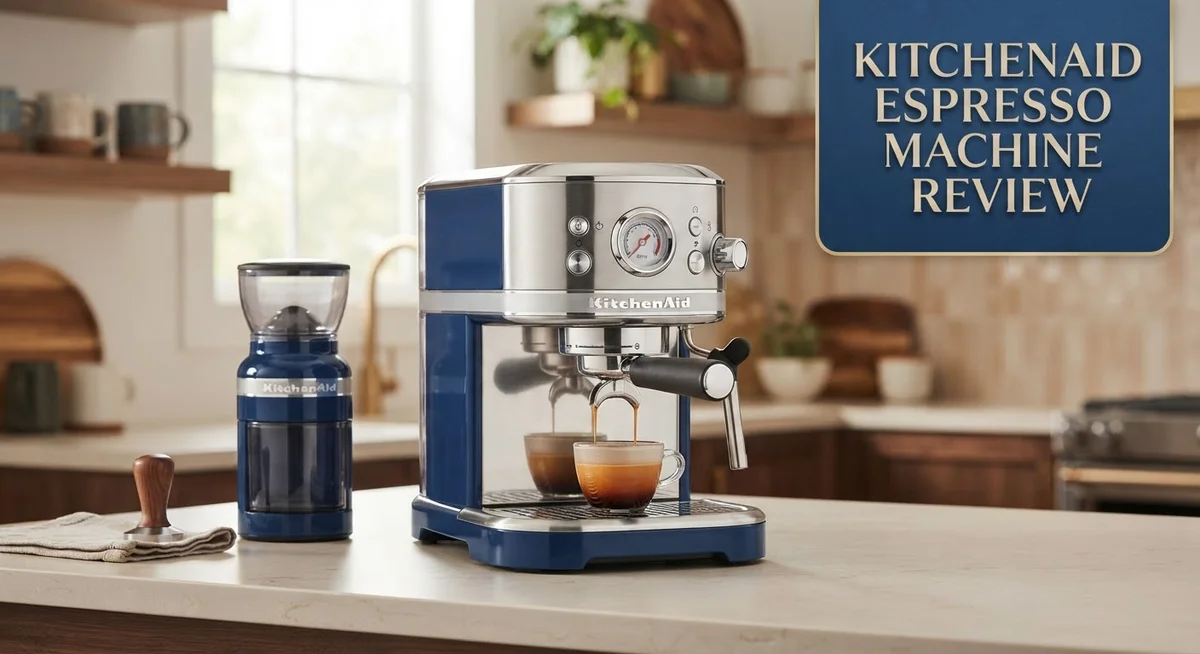
KitchenAid Espresso Machine Review: Live Up To The Hype?
KitchenAid espresso machines bring style and function to your kitchen counter. These machines look great and work well too. Many coffee lovers want a machine that feels premium and performs daily.
This review looks at what makes KitchenAid espresso machines stand out. We check the features, the good points, and the drawbacks. You get an honest look before you decide.
KitchenAid offers both semi-automatic and fully-automatic models. The fully-automatic KF8 gives you 40+ recipe options at the touch of a button. Smart temperature sensors and a variable micro-foam adjuster help you brew your drink your way.
But no machine is perfect. Some users notice thinner shots and average grind quality. We break down these points so you know exactly what to expect.
Ready to see if this machine fits your morning routine? Let us walk you through everything KitchenAid brings to your coffee experience.
In a Nutshell
Here is a quick summary of what you need to know about the KitchenAid espresso machine.
- Quiet performance: This machine runs much quieter than most espresso makers on the market. You can brew your morning coffee without waking the whole house.
- Smart tech inside: Built in temperature sensors help keep your shots consistent. The variable micro foam adjuster also gives you more control over your milk texture.
- Loaded with extras: The semi automatic model comes with 7 accessories to get you started right away. No need to buy separate tools.
- Fast descaling: A simple 4 phase descaling process takes about 10 minutes. This keeps your machine running smoothly with very little effort.
- A few rough edges: Some testers found the shots came out thin and slightly sour. The built in grinder also fell a bit short compared to rivals like the Breville Barista Express.
- Solid alternative in a crowded market: Brands like Philips, SMEG, and Bambino offer similar features. Still, KitchenAid holds its own with unique styling and smart functions.
Build Quality and Design
KitchenAid espresso machines feature a metal clad construction that feels solid in your hands. The removable brew unit makes maintenance straightforward and extends the machine’s lifespan. You can take apart key components without special tools.
The design philosophy balances modern aesthetics with practical engineering. KitchenAid offers multiple color and finish options to match different kitchen styles. The machines sit comfortably on most countertops without taking up excessive space.
Build durability stands out as a genuine strength. The internal components use quality materials that withstand regular use. Temperature sensors are built into the system to maintain consistency shot after shot. This smart tech integration doesn’t compromise the machine’s overall structural integrity.
The portafilter and baskets attach securely to the group head. Everything locks into place with a satisfying click. You won’t experience wobbling or loose connections during operation. The milk pitcher included with semi-automatic models feels substantial and balanced.
Cleaning accessibility improves the ownership experience significantly. All removable parts come out easily without frustration. The basket sits flush against the portafilter for simple removal. Descaling happens through a straightforward 4 phase process that takes roughly 10 minutes. No complicated disassembly required.
The fully-automatic KF8 model includes 40+ recipe options programmed into the system. This means the machine remembers your preferences and executes them consistently. The interface is intuitive without overwhelming buttons or confusing menus.
One area that needs attention involves the grinding mechanism. Some users report that grinding quality lags slightly behind premium competitors. This doesn’t mean the grinder fails, but you may want to invest in a separate burr grinder for optimal results.
The semi-automatic model ships with 7 accessories included. This package provides everything needed to start pulling shots immediately. You get baskets, a milk pitcher, cleaning tools, and more right out of the box.
Overall, KitchenAid builds machines that prioritize user convenience and visual appeal. The metal construction reassures you of longevity. Cleaning and maintenance feel manageable for daily users. The design choices reflect a company that understands what home baristas actually need.


Last update on 2026-09-19 / Affiliate links / Images from Amazon Product Advertising API
Espresso Performance and Shot Quality
The espresso performance of KitchenAid machines reveals both strengths and limitations worth understanding. Temperature stability stands out as a genuine advantage. Smart sensors monitor heat levels throughout the brewing cycle. This keeps your shots consistent from one pull to the next.
However, the actual shot quality presents a mixed picture. Testing shows that KitchenAid machines tend to pull thin, sour espresso shots. This happens even when you dial in the grind correctly. The issue stems partly from the grinding mechanism, which performs slightly below what competitors offer.
The programmable dosing feature helps you control how much water flows through the portafilter. You can adjust this to compensate for thin shots. The variable micro-foam adjuster also gives you control over steam wand performance. These tools let you experiment and find your preferred taste profile.
The fully-automatic KF8 model includes 40+ recipe options. These pre-programmed settings handle milk-based drinks automatically. You simply select your drink and press a button. This convenience appeals to busy mornings, though the base espresso quality remains a consideration.
One positive aspect involves extraction consistency. Once you find settings that work for your beans, the machine reproduces them reliably. The removable brew unit makes it easy to clean between shots. You can also swap baskets to adjust dose sizes.
The semi-automatic model gives you more control over the brewing process. You manage water flow manually. This hands-on approach suits people who enjoy dialing in shots. It also lets you compensate for the machine’s natural tendency toward thin pulls.
Grind adjustment is possible on both models. Finer grinds help extract more flavor. Coarser grinds reduce extraction time. You’ll need to experiment to find the sweet spot that minimizes sourness.
Overall, KitchenAid prioritizes ease of use over competition-level shot quality. The machines deliver acceptable espresso for home enjoyment. They excel at convenience and design. If you prioritize advanced espresso techniques, you might find limitations here. For casual daily drinking, the performance hits a reasonable mark.
Ease of Use and Programmable Features
KitchenAid espresso machines come in two main styles. The semi-automatic version puts you in control of the brewing process. The fully-automatic KF8 model does most of the work for you with 40+ pre-programmed recipes built right in.
The semi-automatic model gives you hands-on control. You decide when to start and stop the water flow. This approach works well if you enjoy experimenting with different techniques. The removable brew unit makes adjustments simple and quick.
The fully-automatic KF8 takes a different approach. It handles dosing, extraction time, and milk frothing automatically. You simply select a recipe and press a button. This machine suits busy mornings when you want consistency without thinking.
Programmable dosing stands out as a key feature across both models. You can set exactly how much water flows through your portafilter. This control helps you dial in shots to match your taste preferences. The system remembers your settings between uses.
The variable micro-foam adjuster gives you real power over milk texture. You can create thin microfoam for cappuccinos or thick foam for lattes. Smart temperature sensors monitor heat throughout the brewing cycle. This keeps your shots consistent from cup to cup.
Cleaning and maintenance feel straightforward on KitchenAid machines. The portafilter and baskets come out easily for rinsing. The milk pitcher detaches without any fuss. Automatic cleaning modes run at the touch of a button, reducing manual scrubbing.


Last update on 2026-06-17 / Affiliate links / Images from Amazon Product Advertising API
Descaling happens quickly thanks to the 4-phase process. Most users complete the entire job in about 10 minutes. The machine guides you through each step, so you never wonder what comes next.
One thing to note: the grind adjustment works, but the grinding quality sits slightly below premium competitors. You may want to pair this machine with a separate burr grinder for best results.
Overall, KitchenAid machines prioritize ease of use and convenience over complex manual control. Both the semi-automatic and fully-automatic models let you make good coffee without a steep learning curve. The programmable features adapt to your lifestyle, whether you prefer quick mornings or hands-on brewing sessions.
Top 3 Alternatives
Breville Barista Express

Last update on 2026-07-13 / Affiliate links / Images from Amazon Product Advertising API
The Breville Barista Express brings café-quality espresso into your kitchen. This machine combines grinding and brewing in one compact unit. You get a built-in conical burr grinder that adjusts to your preferred fineness. The steam wand froths milk quickly and smoothly for lattes and cappuccinos.
Users love how this machine eliminates extra steps. You grind beans, tamp, and brew all without switching devices. The intuitive interface makes it beginner-friendly while still offering enough control for experienced coffee lovers.
Gaggia Classic Pro

Last update on 2026-08-29 / Affiliate links / Images from Amazon Product Advertising API


Last update on 2026-06-17 / Affiliate links / Images from Amazon Product Advertising API
The Gaggia Classic Pro delivers authentic espresso at a smaller scale. This machine features a commercial-style portafilter that serious coffee enthusiasts appreciate. The solid brass boiler maintains consistent temperature throughout your brewing session.
This model requires more hands-on technique than some alternatives. You’ll need to steam milk separately and manage timing carefully. However, this approach appeals to people who enjoy the espresso-making process itself. The compact design fits easily on any counter.
DeLonghi Dedica Espresso

Last update on 2026-07-01 / Affiliate links / Images from Amazon Product Advertising API
The DeLonghi Dedica Espresso offers sleek Italian design with modern convenience. This machine includes both an automatic milk frother and a manual steam wand for flexibility. The compact footprint works perfectly in smaller kitchens.
The Dedica features programmable buttons that remember your favorite drink settings. You can customize water volume and temperature with simple controls. The machine heats up quickly, so you spend less time waiting for espresso.
Each option serves different needs. Choose the Breville for all-in-one convenience. Pick the Gaggia for hands-on control. Select the DeLonghi for space-saving style with automation.
Maintenance and Cleaning
Keeping your KitchenAid espresso machine in top shape requires minimal effort. The machine features a removable brew unit that makes access to internal components simple and straightforward.
Start with daily cleaning. Remove the portafilter after each shot and rinse it under running water. The baskets come out easily too. Wipe down the group head with a damp cloth to remove any coffee residue. This takes about two minutes and prevents buildup that affects flavor.
The milk pitcher needs attention after steaming. Rinse it immediately while the milk is still warm. Use a small brush to clean the steam wand thoroughly. Dried milk hardens quickly and becomes difficult to remove later.
Weekly maintenance involves a deeper clean. Run water through the group head without the portafilter inserted. This flushes out trapped grounds and oils. The machine handles this task smoothly thanks to its smart temperature sensors that manage water flow automatically.
Descaling represents the most important maintenance step. KitchenAid machines include an automatic cleaning mode that simplifies this process significantly. The descaling cycle takes approximately 10 minutes total. The system uses a 4-phase process that removes mineral deposits from internal passages. You’ll need a descaling solution designed for espresso machines. Follow the on-screen prompts if you own the fully-automatic KF8 model.
The metal-clad construction resists damage from regular cleaning. You can safely wipe the exterior with a soft cloth. Avoid harsh chemicals that might damage the finish.
One practical advantage: all removable parts fit easily into your sink. The portafilter, baskets, and shower screen come away without tools. This accessibility means you’ll actually complete cleaning tasks instead of postponing them.
Store your machine in a dry location. Humidity can affect electronic components over time. Empty the water tank if you won’t use the machine for extended periods.
Regular maintenance keeps your KitchenAid running smoothly. The straightforward design means you spend less time fussing and more time enjoying espresso. Most owners find the cleaning routine quick enough to complete daily without frustration.
Noise Level and Operating Experience
KitchenAid espresso machines stand out for their unusually quiet operation. Many users appreciate this feature when making morning drinks without disturbing others in the home. The semi-automatic and fully-automatic models both deliver this benefit, making them suitable for open kitchen layouts.
The operating experience feels intuitive on both machine types. The semi-automatic model lets you control the brewing process by hand, which gives you direct feedback as you work. You press a button to start the water flow and press again to stop it. This hands-on approach appeals to people who enjoy the ritual of espresso making.
The fully-automatic KF8 model takes a different path. You select from 40+ recipe options and the machine handles the rest. Water temperature stays consistent thanks to smart sensors built into the system. The machine stops automatically once it reaches your programmed dose. This removes guesswork from the equation.
Both models feature variable micro-foam adjustment for steaming milk. The controls respond smoothly to small adjustments, so you can dial in exactly the texture you want. Steam power feels adequate for creating silky microfoam without excessive noise or vibration.
Daily operation requires minimal learning. The removable brew unit makes it simple to swap between single and double shots. Metal construction feels solid in your hands and resists damage from regular use. The machine sits stable on countertops without wobbling during extraction.
Temperature recovery happens quickly between shots. You won’t wait long before pulling your next drink. The automatic cleaning modes run quietly in the background. These cycles prevent milk buildup and keep internal passages clear.
One thing to note: the grind adjustment works fine, but grinding quality sits slightly below premium competitors. This means you might want to use an external grinder for the best results. Overall, KitchenAid machines prioritize quiet, convenient operation over complex manual control. They fit well into busy kitchens where you value peace and simplicity.
Pros and Cons
Pros
- Runs with unusually quiet operation, so you won’t hear loud grinding or pump noises during use
- Modern design options fit well in different kitchen styles
- Comes with 7 accessories included (semi-auto model), saving you from extra purchases
- All removable parts clean easily in your sink, and descaling finishes in about 10 minutes
- Variable micro-foam adjuster gives you real control over milk texture for different drinks
Cons
- Pulls thin, sour espresso shots in testing, which means shot quality lags behind direct competitors
- Grinding quality sits slightly below what premium machines deliver, even with adjustable settings
- Positioned higher than some alternative brands offering similar features and automation levels
Who Should Buy It
KitchenAid espresso machines work best for people who want convenience without complexity. If you enjoy making coffee but don’t want to spend hours learning manual techniques, this machine fits your lifestyle.
Home baristas seeking simplicity will appreciate the intuitive controls. You don’t need espresso certification to pull a decent shot. The semi-automatic model guides you through each step. The fully-automatic KF8 does most of the work for you with over 40 recipe options built in.
People who value quiet kitchen appliances should seriously consider KitchenAid. The unusually quiet operation means no disruptive grinding or pump noises early in the morning. Your family stays asleep while you make espresso.
Design-conscious homeowners benefit from KitchenAid’s modern aesthetic options. These machines look great on your counter and complement various kitchen styles. They’re not bulky or industrial looking.
Busy professionals appreciate the quick operation and automatic cleaning modes. Temperature recovery between shots happens fast. You can make multiple drinks without waiting around. The automatic cleaning function saves time on daily upkeep.
People who dislike maintenance headaches should look at KitchenAid. Descaling takes roughly 10 minutes with the 4-phase process. All removable parts fit easily into your sink for washing. The removable brew unit makes deep cleaning simple.
However, skip this machine if you’re a shot quality perfectionist. The espresso pulls thin and sour compared to direct competitors. Serious espresso enthusiasts will notice the difference immediately. If you chase the perfect crema and complex flavor notes, other machines deliver better results.
Also avoid KitchenAid if you want premium grinding capabilities. The grind adjustment works fine for basic needs, but grinding quality sits slightly below what premium machines offer. You won’t achieve the consistency that high-end grinders provide.
KitchenAid espresso machines target people who prioritize ease and design over technical mastery. They excel for casual coffee lovers and those with limited counter space. The machine does the heavy lifting while you enjoy your morning routine without stress or frustration.
Final Verdict
The KitchenAid espresso machine earns its place in many kitchens. It runs quietly. It looks great. It cleans up fast.
But this machine has a clear identity. It suits people who want ease over perfection. It does not suit people chasing café-quality shots.
Semi-automatic and fully-automatic models both deliver a smooth daily routine. You get consistent steam, quick heat recovery, and simple controls. Nothing about the process feels complicated.
Still, the shots themselves tell a different story. Testing shows thin and sour espresso results. This gap in flavor quality matters if you care deeply about taste.
The grinder also falls short of premium standards. It works fine for casual use. It does not match dedicated grinders that serious coffee fans expect.
So who should buy this machine? Think about your goals first.
If you want a quiet, low-maintenance machine that fits your kitchen style, KitchenAid delivers. It handles daily use with minimal fuss. Cleaning stays simple. Descaling takes minutes, not hours.
If you want bold, café-level espresso, look elsewhere. Competitors like the Breville Barista Express focus more on shot quality and grind precision. KitchenAid focuses on convenience and design.
Think of this machine as a lifestyle choice, not a coffee lab tool. It rewards people who value simplicity. It disappoints people who chase perfect crema.
In short: KitchenAid offers a smooth, quiet, and stylish espresso experience. It removes friction from your morning routine. It does not remove the need for compromise on flavor.
Choose this machine if convenience matters more than precision. Skip it if you already own a serious grinder and expect restaurant-level shots.
For most home users who want an easy entry into espresso, this machine still makes sense. For coffee purists, it may leave you wanting more.
Frequently Asked Questions
Can I use pre-ground coffee in a KitchenAid espresso machine?
Yes, you can use pre-ground coffee. KitchenAid machines accept both whole beans and pre-ground options. The fully-automatic models have built-in grinders, but you can bypass them and add ground coffee directly to the portafilter. This gives you flexibility if you prefer a specific grind or brand.
How long does the descaling process take?
Descaling takes about 10 minutes from start to finish. The machine runs through a 4-phase cleaning cycle automatically. You just add the descaling solution, follow the prompts, and let it work. This quick process means you won’t lose much time on maintenance.
What’s the difference between the semi-automatic and fully-automatic models?
The semi-automatic models require you to start and stop the shot manually. You control the timing and get hands-on involvement. The fully-automatic models feature 40+ recipe options and handle the entire process for you. Choose semi-automatic if you want more control, or pick fully-automatic if you prefer convenience and consistency.
Does this machine make quiet espresso?
Yes, KitchenAid machines operate unusually quietly compared to other espresso makers. If you live in an apartment or prefer a peaceful kitchen, this is a real advantage. The quiet operation won’t disturb your household during morning coffee prep.
What accessories come included?
The semi-automatic model includes 7 accessories. You get a portafilter, baskets, a milk pitcher, and other tools. This means you won’t need to buy extras right away to start making drinks.

Hello! I’m Eloise Wilson, the culinary enthusiast behind SimplyCookings. Cooking is my canvas and flavors are my palette. I’m here to share easy-to-follow recipes and kitchen wisdom that will make your cooking journey joyful and delicious. Join me and let’s turn everyday meals into extraordinary experiences!