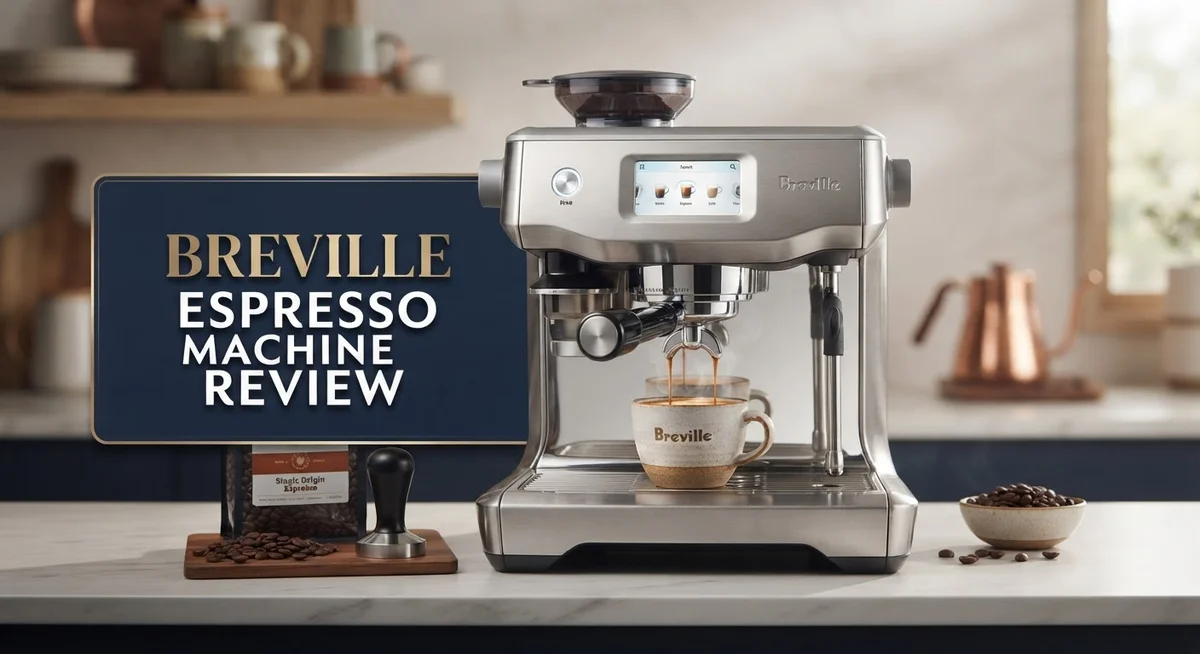
Breville Espresso Machine Review: Is It Worth Trying?
Want café style coffee at home? The Breville Espresso Machine might be your answer. This machine grinds beans and brews espresso in one unit.
Many home baristas love this all-in-one design. It saves counter space. It also saves you money on separate grinders.
The Barista Express model comes with steel conical burrs. It offers 16 grind settings. You get full control over your coffee flavor.
Built-in cleaning cycles keep the machine healthy. Self-monitoring descaling alerts help you maintain performance. This means less guesswork for you.
But is it perfect? Not quite. Some users report durability issues over time. Others note it still requires basic grind knowledge.
In this review, we break down everything you need to know. We cover the specs, the pros, and the cons. We also compare it to top competitors like the Bambino Plus and Barista Express Impress.
Ready to see if this machine fits your kitchen? Let’s dive into the details.
In a Nutshell
- Water tank holds a generous 67 oz, so refills stay rare during busy mornings.
- The bean hopper fits half a pound of beans, letting you grind fresh right before brewing.
- With 1600W power, this machine heats up fast and keeps temperature steady during extraction.
- At about 22 pounds, it feels sturdy on a counter without being impossible to move.
- You get 16 grind settings, giving you fine control over every shot’s taste.
- Some owners report durability issues after months of daily use, so care matters.
- The unit is made in China, which raises quality concerns for a few buyers.
- Even with a simple design, you still need basic grind knowledge to get the best results.
- Compared to the Bambino Plus or Barista Express Impress, this model gives more manual control for hands on brewing.
Build Quality and Materials
The Breville Barista Express uses stainless steel throughout its body. This material resists rust and handles daily use well. The outer casing feels solid when you touch it, and the machine sits stable on your counter.
Inside, you’ll find steel conical burrs for grinding beans. These burrs stay sharper longer than flat alternatives. They crush beans evenly, which means better flavor in every shot. The burr system runs quietly compared to blade grinders.
The water tank is made from clear plastic. You can easily see how much water remains. The tank holds 67 ounces, so you won’t refill constantly during morning coffee sessions. The bean hopper also uses durable plastic and stores half a pound of beans comfortably.
The group head and portafilter are metal components. These parts handle hot water and pressure without warping. The steam wand is stainless steel, which cleans easily after frothing milk. Metal parts generally last longer than plastic alternatives.
One concern owners mention is durability over time. Some users report breakdowns after several months of daily use. The internal pump and heating element can fail unexpectedly. This suggests the machine may not survive years of heavy use without issues.
The overall weight is 22 pounds. This heft comes from the metal components and internal machinery. A heavier machine usually means better build quality, though weight alone doesn’t guarantee longevity.
Assembly quality matters too. The machine is made in China, which raises questions for some buyers about quality control. Not all units perform identically, and some arrive with defects.
The compact design means less material overall. Breville prioritized space efficiency over maximum durability. This trade off works well for small kitchens but may affect how long the machine lasts.
The self cleaning cycles help preserve internal parts. Regular maintenance through these automated systems reduces wear on metal components. This feature shows Breville designed the machine with upkeep in mind.
Overall, the build uses solid materials in key areas. The stainless steel body and metal components feel premium. However, durability concerns suggest the internal engineering may not match the exterior quality.

Last update on 2026-07-13 / Affiliate links / Images from Amazon Product Advertising API
Grinder Performance and Consistency
The steel conical burrs inside the Barista Express grind beans with impressive consistency. These burrs crush beans evenly, which means every shot tastes similar to the last one.
You get 16 grind settings to adjust how fine or coarse your grounds become. This range lets you dial in the perfect texture for your beans and brewing style. Moving from one setting to another makes a real difference in extraction time and flavor.
The grinder performs best when you use fresh beans. Older beans grind differently and can throw off your results. Store your beans in an airtight container away from heat and light to keep them fresh longer.
Consistency improves with practice. New users often struggle at first because grind size affects everything. Too fine and your shot pulls slowly. Too coarse and water rushes through without extracting flavor. The machine makes it simple to adjust, but you need to understand these basics.
The integrated grinder sits right inside the machine. This means you grind directly into the portafilter, reducing waste and keeping flavors fresh. No separate grinder takes up counter space, which appeals to many home brewers.
One thing to watch: the grinder can produce some heat during operation. This heat slightly warms the grounds, which some people say affects flavor slightly. Most users find this impact minimal during normal use.
Burr maintenance keeps your grinder sharp over time. The self cleaning cycles help, but occasional deep cleaning extends the burrs’ life. Regular care prevents buildup that dulls grinding performance.
The grinder’s motor runs at a steady speed, which helps produce uniform particle size. This stability means your espresso shots remain predictable from day to day. You’ll notice this consistency especially after your first week of use.
Overall, the grinding system delivers reliable performance for home espresso lovers. It handles daily use well and produces grounds suitable for quality shots. The combination of burr quality and adjustable settings gives you the control you need to make great coffee at home.
Ease of Use and Learning Curve
Getting started with the Breville Barista Express feels approachable for most people. The machine groups all essential functions into one compact unit, so you’re not juggling multiple gadgets on your counter.
The learning curve sits on the gentler side compared to standalone espresso machines. New users can pull decent shots within their first week of practice. The integrated grinder means you control everything from bean to cup without switching between devices.
However, “easy” doesn’t mean “no learning required.” You still need to understand grind size and how it affects your espresso. Too fine, and water struggles to flow through. Too coarse, and your shot runs too fast. The machine gives you feedback through flow rate and taste, which helps you adjust over time.


Last update on 2026-06-17 / Affiliate links / Images from Amazon Product Advertising API
The 16 grind settings let you make small tweaks without guessing. Each setting produces noticeably different results, so you can dial in your preferred taste gradually. Most beginners land on a sweet spot within 10 to 15 attempts.
Temperature management happens automatically, which removes one major headache. You don’t fuss with heating wands or wait for mysterious warm up times. The machine reaches brewing temperature quickly and stays consistent throughout your shot.
The self cleaning cycles deserve mention here. Built in prompts guide you through maintenance steps, so you’re not left wondering what to do. This automation helps beginners avoid common mistakes that damage machines.
One realistic note: the machine’s simplicity has limits. You still need to learn proper tamping technique and understand water pressure basics. These skills come naturally with repeated use, but they’re not automatic.
The portafilter and group head are straightforward to use. You insert, lock, and press. No confusing levers or complex sequences. This intuitive design means less frustration during your first month.
Overall, the Breville Barista Express welcomes newcomers while offering enough control for developing your skills. The combination of automation and manual input strikes a practical balance for home espresso enthusiasts at any experience level.
Top 3 Alternatives
DeLonghi Dedica Espresso

Last update on 2026-07-01 / Affiliate links / Images from Amazon Product Advertising API


Last update on 2026-06-17 / Affiliate links / Images from Amazon Product Advertising API
The DeLonghi Dedica brings Italian engineering to your kitchen counter. This machine features a compact design that fits small spaces without sacrificing power. The integrated milk frother makes creamy cappuccinos and lattes simple. You get consistent pressure and temperature control for quality shots every time.
The machine heats up quickly, so you don’t wait long for your morning coffee. Its intuitive buttons make operation straightforward for beginners. The removable water tank simplifies refilling and cleaning routines.
Gaggia Classic Pro

Last update on 2026-08-29 / Affiliate links / Images from Amazon Product Advertising API
Gaggia Classic Pro appeals to coffee lovers who want manual control. This semi-automatic machine lets you adjust grind size and tamping pressure to dial in your perfect shot. The three-way solenoid valve reduces pressure when you stop pulling shots, protecting your machine’s longevity.
The portafilter design feels professional in your hands. Gaggia includes a basic steam wand for milk frothing. Many users appreciate how this machine encourages learning proper espresso techniques through hands-on experience.
Roka Espresso Machine

Last update on 2026-09-19 / Affiliate links / Images from Amazon Product Advertising API
Roka machines combine modern design with practical functionality. The stainless steel construction provides durability and a sleek appearance. Roka focuses on delivering balanced pressure and heat stability for consistent results.
These machines typically offer user-friendly interfaces that appeal to home baristas. The build quality suggests long-term reliability. Roka machines work well if you want straightforward operation without excessive complexity.
Each option serves different needs. Choose the DeLonghi for convenience and compact size. Pick the Gaggia if you enjoy learning espresso fundamentals. Select Roka when you prioritize design and consistent performance.
Water Tank Capacity and Maintenance
The water tank on the Breville Barista Express holds 67 ounces of water. This capacity works well for most home users who brew several cups daily. You won’t need to refill constantly during your morning routine.
The tank itself uses clear plastic construction. This design choice lets you see your water level at a glance. You can easily spot when it’s time to refill before your espresso pull. The transparent material also makes it simple to check for mineral buildup or debris inside.
Refilling the tank takes just seconds. The tank lifts straight out from the top of the machine. You can rinse it under running water when needed. Pop it back in and you’re ready to brew again. This straightforward process keeps your workflow smooth and uninterrupted.
Maintenance of the water tank deserves your attention. Hard water minerals can accumulate over time inside the tank and internal lines. The Breville Barista Express includes built in self monitoring cleaning cycles that prompt you when descaling is needed. These automatic alerts remove the guesswork from maintenance schedules.
Descaling should happen regularly in areas with hard water. You’ll run a descaling solution through the machine following the included instructions. This process clears mineral deposits from the internal pathways. Regular descaling keeps your espresso tasting fresh and prevents performance issues.
Between descaling sessions, simple rinsing keeps things clean. Empty the tank daily if you’re not using the machine regularly. A quick rinse under the tap prevents stale water from sitting inside. This habit prevents bacterial growth and off flavors in your espresso.
The tank’s 67 ounce capacity balances convenience with counter space. It’s large enough to skip frequent refills yet compact enough for most kitchens. Combined with the automatic cleaning reminders, water tank management becomes one less thing to worry about. You can focus on perfecting your espresso technique instead of complicated maintenance routines.
Espresso Quality and Extraction
The Breville Barista Express produces espresso that meets home enthusiast expectations. The extraction process relies on pressure consistency and proper tamping technique. You control the outcome through your own actions, which means results improve as you gain experience.
Water temperature stays stable throughout your shot. The machine manages this automatically, so you don’t need to monitor it manually. This feature reduces variables and helps you focus on grind size and tamping pressure instead.
The portafilter holds grounds securely during extraction. You insert it into the group head, and the machine applies pressure to push hot water through your coffee. The result flows into your cup in roughly 25 to 30 seconds for a standard shot.
Extraction quality depends heavily on how fine you grind your beans. The 16 grind settings give you room to experiment. Start with a medium setting and adjust finer if your shot runs too quickly, or coarser if it runs too slowly.
Tamping pressure matters more than most beginners realize. A level, firm tamp creates even water flow through the grounds. Uneven tamping produces uneven extraction, which affects flavor and crema quality.
The crema layer on top of your shot indicates proper extraction. You should see a rich, caramel colored layer about one quarter inch thick. Thin or missing crema suggests your grind was too coarse or your tamping was too light.
Consistency improves with repetition and attention to detail. The machine provides the equipment. You provide the technique. Together, they create shots that taste balanced and smooth.
One realistic note: the Barista Express won’t match shots from commercial machines. That’s normal for home equipment. What it does deliver is reliable, repeatable espresso that tastes noticeably better than budget alternatives.
The integrated grinder means you grind fresh beans moments before brewing. Freshly ground coffee extracts better than pre ground beans. This timing advantage gives you a head start toward quality shots.
Pros and Cons
Pros
- All-in-one design combines grinder, espresso machine, and hot water dispenser in one compact unit
- Beginner-friendly with automatic temperature control and self-cleaning cycles that remove guesswork
- Produces consistent espresso shots once you understand basic grind and tamping techniques
- 16 grind settings let you make precise adjustments without trial and error
- Compact footprint fits on most kitchen counters without taking up excessive space
Cons
- Durability issues reported by some users, with breakdowns occurring after moderate use
- Requires knowledge of grind size and bean selection despite the simplified design
- Made in China, which raises concerns about long-term build quality for some buyers
- Still demands practice and attention to detail to master proper extraction technique
Who Should Buy It
The Breville Barista Express works best for specific types of coffee drinkers. Home enthusiasts who want control over their espresso fit this machine perfectly. You get a grinder, espresso maker, and steamer all in one unit.
Beginners benefit from the automatic temperature control. The machine removes much of the guesswork that scares new users. You won’t struggle with confusing settings or complicated startup procedures.
People with limited counter space should consider this model seriously. The compact footprint means it fits alongside your toaster and coffee maker without dominating your kitchen. You save space compared to buying separate grinder and espresso machines.
Coffee lovers who enjoy experimenting will appreciate the 16 grind settings. You can adjust your grind size to match different beans and brewing styles. This flexibility lets you dial in shots exactly how you want them.
The self cleaning cycles appeal to users who value convenience. You don’t need to memorize complex maintenance routines. The machine tells you when descaling is needed and handles much of the work automatically.
However, this machine isn’t ideal for everyone. If you want zero learning curve, this requires understanding grind size and tamping technique. You’ll spend time practicing before shots become consistently excellent. Expect a few weeks of adjustment.
Users seeking maximum durability might look elsewhere. Some owners report breakdowns after moderate use. This machine works well for regular home use, not commercial or heavy daily operation.
Those who prefer simplicity over customization should explore other options. The Breville demands more engagement than fully automatic machines. You need to think about bean selection, grind adjustments, and tamping pressure.
The ideal buyer owns this machine because they enjoy the espresso making process itself. You’re not just chasing caffeine. You want involvement in creating your drink. You appreciate having one compact unit that does multiple jobs. You’re willing to invest time learning proper technique. You make espresso several times per week and value consistency. This profile matches the Breville Barista Express owner perfectly.
Final Verdict
The Breville Barista Express earns its spot as a solid entry point into home espresso making. It brings grinder and machine together in one unit, and that combination saves you counter space and setup time.
This machine suits people who want to learn real espresso skills. You get hands on control without needing a separate grinder or a steep manual process.
Compared to the Breville Bambino Plus, the Barista Express gives you more control over grind size. The Bambino Plus skips the built in grinder entirely, so you lose that flexibility.
The Barista Express Impress adds automatic tamping, which removes one manual step. If you want full control over every stage, the standard Barista Express still wins that comparison.
The De’Longhi Stilosa offers a simpler alternative for people who don’t want a grinder attached. It skips many features found on the Breville lineup, so keep that trade off in mind.
Durability remains the biggest question mark for this machine. Some owners report breakdowns after regular use, so factor that risk into your decision.
If you already know espresso basics and want reliable results without extra fuss, this machine delivers well. It rewards attention and practice with shots that taste genuinely good.
This isn’t a machine for people who want zero effort. You still need to learn grind settings and tamping pressure to get the best results every time.
For anyone ready to invest time in learning the process, the Barista Express offers real value. It teaches skills that carry over to any espresso machine you use later.
Overall, this model works best as a stepping stone into serious home espresso brewing. It bridges the gap between basic pod machines and professional grade equipment.
Choose this machine if you want hands on learning paired with consistent daily performance. Look elsewhere if you prioritize long term reliability above all else.
Frequently Asked Questions
Does the Breville Barista Express come with a built-in grinder?
Yes, it does. The machine combines three functions into one unit: a grinder, espresso maker, and hot water dispenser. You get steel conical burrs with 16 grind settings, so you can adjust coarseness directly before brewing.
This all-in-one design means you don’t need to buy a separate grinder. The grinder sits right above the group head for convenience.
How many cups can the water tank hold?
The water tank holds 67 fluid ounces. This capacity lets you make multiple espresso shots or steam milk without refilling constantly. For most home users, you’ll refill it every few days depending on usage.
Is this machine easy to use for beginners?
The Barista Express works well for people new to espresso. Automatic temperature control removes one major learning curve. Self-cleaning cycles handle maintenance automatically.
That said, you still need to understand grind size and basic tamping technique. The machine simplifies the process, but it doesn’t eliminate the skill involved entirely. Most beginners grasp these concepts within a few uses.
What maintenance does this machine require?
Breville built in self-monitoring cleaning and descaling cycles. The machine alerts you when it’s time to clean or descale, then guides you through the process.
You’ll also need to purge the group head between shots and empty the used grounds basket regularly. These tasks take just seconds and become routine quickly.
How does the Barista Express compare to the Bambino Plus?
The Barista Express gives you more control over grind size with its 16 settings. The Bambino Plus prioritizes speed and compact design. Choose the Barista Express if you want to experiment with different beans and grind levels. Pick the Bambino if you value quick heat-up time and minimal counter space.

Hello! I’m Eloise Wilson, the culinary enthusiast behind SimplyCookings. Cooking is my canvas and flavors are my palette. I’m here to share easy-to-follow recipes and kitchen wisdom that will make your cooking journey joyful and delicious. Join me and let’s turn everyday meals into extraordinary experiences!