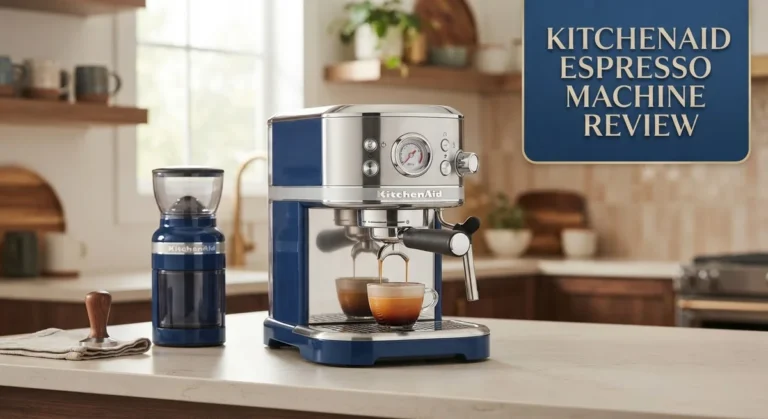
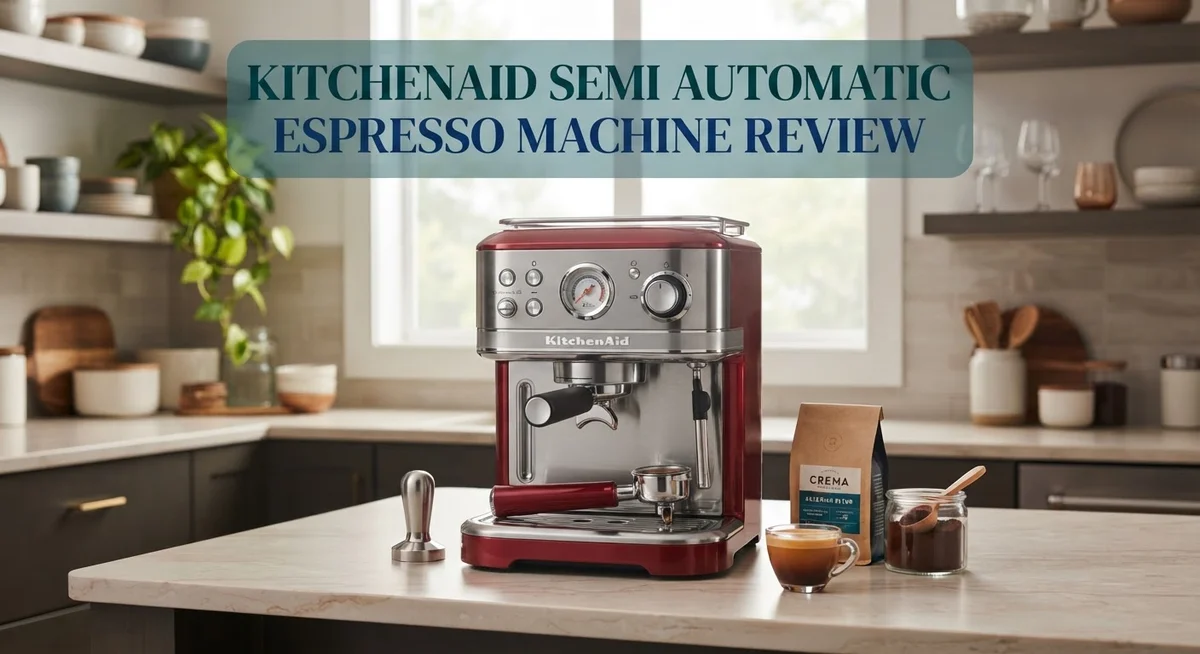
KitchenAid Semi-Automatic Espresso Machine Review: Is It Worth Trying?
Do you love espresso but hate complicated machines? The KitchenAid Semi Automatic Espresso Machine might be your answer. It sits between manual control and automatic ease.
This machine grinds your beans fresh with a built in conical burr grinder. It has 15 external and 8 internal settings. You get full control over your grind size.
The brew process feels simple. Smart temperature sensors help you pull consistent shots every time. A removable brew unit with a spiral showerhead ensures even saturation.
One thing stands out right away. This machine runs unusually quiet. It operates at just 60 to 65 decibels, making your morning routine peaceful.
KitchenAid also added an ionizer to reduce static in your grounds. This means less mess and cleaner shots. The automatic cleaning modes make upkeep easy too.
Is this the right espresso machine for your kitchen? We tested the features, design, and performance. This review breaks down everything you need to know.
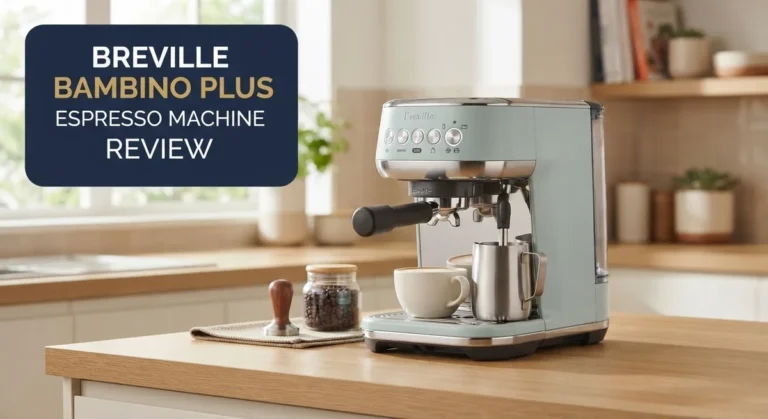
You will learn about the pros, the cons, and how it compares to competitors like the Breville Bambino Plus. Let’s dive into the details.
In a Nutshell
This machine gives you a quick snapshot before you dive deeper. Here is what you need to know about the KitchenAid Semi Automatic Espresso Machine.
-
Quiet Operation: This machine runs at just 60 to 65 dB. That makes it much quieter than the Breville Barista Express.
-
Smart Temperature Control: Built in sensors help you get consistent heat. This means better shots every time you brew.
-
Removable Brew Unit: The spiral showerhead design ensures even water flow. You can also take it out for easy cleaning.
-
Generous Bean Capacity: The 8.8 oz hopper locks securely in place. It holds enough beans for several brewing sessions.
-
Great for Beginners: This is a solid entry-level semi-automatic pick. You will need some practice to nail consistent shots though.
-
Model KES6404 Bonus: This version comes with 7 handy accessories. It gives you everything you need to start brewing right away.
Overall, this machine balances simplicity with quality performance. It suits anyone who wants fresh, quiet espresso without extra fuss.
Grinder Quality and Burr System
The grinder quality makes a real difference when you brew espresso at home. KitchenAid equipped this machine with integrated conical burrs that handle the grinding work. These burrs sit inside the machine, so you don’t need a separate grinder.
You get 15 external adjustments plus 8 internal settings for your grind size. This means you can fine tune your grounds to match your brewing style. Coarser grinds brew faster. Finer grinds extract more flavor. The range lets you experiment and find your sweet spot.
One standout feature is the ionizer technology. This reduces static electricity in your grounds. Why does that matter? Static causes grounds to clump together and stick to your portafilter. An ionizer prevents this, so your grounds distribute evenly. Even distribution leads to better extraction and more consistent shots.
The conical burr design itself matters too. Conical burrs work differently than flat burrs. They grind beans between a cone and a ring. This motion produces consistent particle size, which is crucial for espresso. Inconsistent particles create uneven water flow through your puck. You end up with some over extracted spots and some under extracted spots. Consistency fixes this problem.
The hopper holds 8.8 ounces of beans. It’s removable and lockable, so you can swap between different bean varieties. Just lock it in place before grinding. The machine won’t start grinding unless the hopper sits properly.
Heat matters too when grinding. Friction from the burrs can warm your beans slightly. KitchenAid designed this grinder to minimize heat buildup. Warm beans lose some flavor notes, so cooler grinding preserves your coffee’s character.
One thing to remember: grinding quality depends on your technique too. Even great burrs need the right bean selection and maintenance. Keep your beans fresh and store them properly. Clean your burrs regularly to prevent oil buildup.
The grinder on this machine punches above its weight for an entry level semi automatic. It gives you real control without overwhelming complexity. You’ll notice the difference in your cup.


Last update on 2026-09-19 / Affiliate links / Images from Amazon Product Advertising API
Shot Consistency and Brewing Performance
The KitchenAid Semi Automatic Espresso Machine delivers shots with real consistency when you follow proper technique. The machine pulls espresso in 50 to 55 seconds, yielding 5.4 to 5.7 fluid ounces per shot. This timing window sits right in the sweet spot for quality extraction.
Smart temperature sensors keep your water heat stable throughout the brewing process. You get consistent heat from the first shot to the last one in your morning routine. This removes one major variable that trips up beginners on other machines.
The removable brew unit plays a key role in shot quality. Its spiral showerhead design spreads water evenly across your coffee grounds. Even water distribution means fewer dry spots and better flavor in every cup.
Your grind size directly impacts shot consistency. The machine gives you 15 external adjustments plus 8 internal settings to dial in the perfect grind. Finer grinds slow water flow and increase extraction time. Coarser grinds speed things up. Finding your sweet spot takes a few tries, but the range of options lets you nail it.
The conical burr grinder itself matters for consistency. These burrs crush beans uniformly rather than chopping them randomly. Uniform particle size means water flows through your grounds at the same rate everywhere.
One thing to know: this machine requires user skill to maintain consistency. The semi-automatic design means you control the shot button. You decide when to start and stop pulling. New users sometimes rush or drag out shots, which throws off extraction.
The ionizer in the grinder reduces static clinging. Less static means your grounds flow smoothly into the portafilter without clumping. Smooth flow equals even tamping and better extraction.
Temperature stability combined with even water distribution creates the foundation for repeatable shots. Add your proper grinding technique and consistent tamping pressure, and you get espresso that tastes the same every morning. The machine does its part. You do yours. Together, you make great espresso.
Design, Build Quality, and Noise Level
The KitchenAid semi automatic espresso machine features a clean, modern aesthetic that fits easily into most kitchen spaces. The body design feels solid and well balanced. You’ll notice the intuitive control layout right away, which makes operation straightforward even for first time espresso makers.
Build quality stands out as a real strength here. The materials feel durable without being overly heavy. The removable brew unit comes apart cleanly for maintenance, and all components slot together with satisfying precision. This attention to detail matters because it means fewer frustrations during daily use.
Noise levels are genuinely impressive for a machine in this category. At 60 to 65 dB, it operates quieter than many competitors. This means you can pull shots early morning without disturbing others in your home. The quiet operation comes from careful engineering throughout the machine, not just one component.
The integrated grinder sits within the main body, which keeps your counter space minimal. The conical burr system runs smoothly and consistently. Everything feels like it was thought through by people who actually use espresso machines.
One design consideration: the removable components are straightforward to clean, but you’ll want to do this regularly. The spiral showerhead in the brew unit ensures water distributes evenly across your grounds. This design choice directly impacts the quality of shots you’ll pull.
The color options give you flexibility in matching your kitchen style. Modern finishes feel premium without the premium price tag that comes with some competitors.
The overall construction suggests this machine will last through years of regular use. Parts are accessible if something needs replacement down the line. The engineering balances simplicity with functionality, which means fewer things break and repairs stay simple.
For someone entering the semi automatic espresso world, this design approach removes unnecessary complexity. You get a machine that looks good, feels solid in your hands, and operates quietly. The build quality justifies the investment because durability means you’ll actually use this machine regularly rather than watching it collect dust.
Top 3 Alternatives
Gaggia Classic Pro

Last update on 2026-08-29 / Affiliate links / Images from Amazon Product Advertising API
The Gaggia Classic Pro gives you manual control over your espresso shots. You pull the lever to apply pressure, which means you learn proper technique quickly. The machine heats water fast, so you start brewing within minutes. Its compact design fits small kitchens easily.
This model uses a traditional portafilter system. You tamp the grounds yourself, giving you full control over extraction. The steam wand froths milk by hand, letting you develop latte art skills. Many home baristas love this hands-on approach because it feels authentic.
Breville Barista Express

Last update on 2026-07-13 / Affiliate links / Images from Amazon Product Advertising API
The Breville Barista Express includes a built-in grinder, so you grind beans right before brewing. This feature keeps your espresso fresh since grounds lose flavor quickly after grinding. The machine has a digital temperature control that maintains consistent heat.
You still pull shots manually, but the process feels more refined. The steam wand creates smooth microfoam for cappuccinos and flat whites. The group head heats up in about 30 seconds. Many users appreciate how this machine bridges the gap between beginner and intermediate skill levels.
DeLonghi Dedica

Last update on 2026-07-01 / Affiliate links / Images from Amazon Product Advertising API
The DeLonghi Dedica offers a sleek, compact design that looks modern on any counter. It features both manual and automatic modes, giving you flexibility in how you brew. The machine heats quickly and maintains stable temperatures throughout your session.
This model includes a built-in milk frother that works automatically or manually. The portafilter accepts both single and double shots. The water reservoir is removable, making cleaning simple. Users often choose this machine when they want reliability without complicated features.
Ease of Use and Learning Curve
Learning to use this machine is straightforward. The control panel layout makes sense from your first brew. You won’t feel overwhelmed by too many buttons or confusing menus.
The semi-automatic design strikes a good balance. You control when the pump starts and stops, which gives you hands-on involvement without demanding expert knowledge. This approach helps you learn espresso fundamentals naturally.
Getting your first shot takes practice, though. The machine itself is easy to operate, but espresso requires technique. You need to learn proper tamping pressure, distribution methods, and timing. Most users find they improve noticeably within their first week of daily brewing.
The integrated grinder adds a learning step. You’ll adjust those 15 external settings and 8 internal adjustments as you dial in your beans. Start with a middle setting and move up or down based on your shot speed. This trial and error process teaches you how grind size affects extraction.
Temperature stability happens automatically thanks to the smart sensors. You don’t need to worry about heat fluctuations during your shot. This removes one variable from your learning curve.
The removable brew unit simplifies maintenance. You can access it easily for cleaning, which encourages good habits early on. Regular cleaning prevents buildup and keeps your shots tasting fresh. Most users develop this routine quickly.
Documentation and support matter here. KitchenAid provides clear instructions with the machine. Online communities share tips for this specific model, so you can find answers when questions arise.
Consistency comes with repetition. Your third week of use feels different from your first week. You’ll start recognizing how small adjustments affect your results. The machine responds well to your input, which builds confidence.
New espresso drinkers appreciate this machine because it teaches without intimidating. You’re not locked into one method. You can experiment with grind sizes, tamp pressure, and shot length. The machine gives you enough control to learn, but not so much that you feel lost.
Most owners report feeling comfortable with their machine within two to three weeks of regular use.
Maintenance and Cleaning
The removable brew unit makes cleaning straightforward. You can take it out after each use and rinse it under warm water. This simple step prevents coffee oils from building up inside the machine.
The showerhead spiral design sits at the top of the brew unit. Water flows evenly across your coffee grounds through this component. Clean it gently with a soft brush to remove any residual grounds or mineral deposits.
Regular backflushing keeps your machine running smoothly. Run water through the group head without the portafilter attached for a few seconds. This clears out loose coffee particles that could affect future shots. Do this every few brewing sessions for best results.
The bean hopper holds 8.8 ounces of beans and lifts out easily. Empty it completely before deep cleaning. Wipe the interior with a dry cloth to remove any residual oils or dust that accumulate over time.
Descaling matters more than many owners realize. Mineral buildup from water happens gradually and affects temperature stability. Use a descaling solution designed for espresso machines. Run it through the group head and steam wand according to the product instructions. Repeat this process every one to three months depending on your water hardness.
The steam wand requires immediate attention after each use. Wipe it with a damp cloth right after steaming milk. This prevents milk from hardening inside the nozzle. Once weekly, soak the removable tip in hot water with a small amount of descaling solution.
The integrated grinder needs occasional attention too. Grounds can stick to the burrs over time. Run the grinder empty for a few seconds to clear out any remaining particles. Never use water to clean the internal burrs.
Keep your machine on a stable surface away from moisture. Store it in a dry location when not in use. Cover it loosely with a cloth to prevent dust accumulation. These simple habits extend the life of your machine significantly and keep your espresso tasting fresh.
Pros and Cons
Pros
- Operates at 60–65 dB, making it noticeably quieter than comparable semi-automatic machines like the Barista Express
- Integrated conical burr grinder with 23 total adjustment settings (15 external, 8 internal) plus ionizer technology reduces static and improves grind consistency
- Smart temperature sensors maintain stable heat automatically, removing one variable from the learning curve
- Removable brew unit with spiral showerhead design simplifies cleaning and backflushing routines
- Modern color options let you match your kitchen décor while the compact footprint fits most counter spaces
Cons
- Requires user skill and practice to dial in shots consistently, especially during your first two to three weeks
- Limited manual control over certain variables compared to fully manual espresso machines, which some enthusiasts find restrictive
- Steam wand needs immediate attention after each use to prevent milk buildup and maintain performance
Who Should Buy It
This machine works best for people who want to learn espresso without feeling overwhelmed. You get a semi-automatic setup that teaches you the fundamentals while removing some of the guesswork through smart technology.
Home baristas with patience fit this profile perfectly. You’ll need to spend time dialing in your shots and understanding how grind size, tamping pressure, and extraction time work together. The learning curve exists, but it’s manageable. Most owners feel confident within two to three weeks of regular use.
Coffee enthusiasts upgrading from basic brewers will appreciate the quality burr grinder and temperature stability. You move beyond instant coffee or drip machines into real espresso territory. The integrated conical burrs give you 23 adjustment settings, so you can fine-tune your grind as you develop your palate.
People who value quiet kitchen appliances should consider this option. Operating at 60–65 dB means you won’t disturb family members or housemates during morning brewing. This sets it apart from louder competitors in the semi-automatic category.
Those with limited counter space benefit from the compact footprint. The machine doesn’t demand a huge footprint, making it realistic for apartments or smaller kitchens. Modern color options help it blend with your décor rather than dominate it.
Skip this machine if you want zero learning curve. Fully automatic models handle everything for you, but they sacrifice the hands-on experience this semi-automatic provides. You also won’t get the same grind-to-cup control.
Households where multiple people brew espresso differently will struggle. The machine rewards consistency and personal technique. If everyone wants different results without adjusting settings, you’ll face frustration.
People who rarely clean their equipment should look elsewhere. The removable brew unit and steam wand require regular attention. Neglecting maintenance affects shot quality and machine longevity.
This KitchenAid machine suits curious coffee lovers who want to develop real skills. You get quality components, quiet operation, and a realistic entry point into semi-automatic espresso brewing. Success depends on your willingness to practice and maintain the equipment properly.
Final Verdict
This machine earns its place as a solid choice for anyone starting their espresso journey. It blends smart engineering with genuine performance. You get a machine that teaches good habits instead of hiding them.
The grinder quality stands out among machines in this class. Shot consistency improves fast once you understand the workflow. Many owners notice better results within their first few attempts.
Compared to competitors like the Breville Bambino Plus, this machine offers a quieter experience. That matters if you brew coffee early morning without waking the house. The design feels thoughtful rather than rushed.
Fully automatic models exist for people who want zero effort. This semi automatic version rewards a bit more attention. You get more say over your final cup because you control key parts of the process.
Beginners who enjoy learning new skills will feel at home here. The machine guides you without overwhelming you with unnecessary settings. It strikes a fair balance between control and simplicity.
People who already know exact preferences from advanced machines might find some limits. This model does not replace a fully manual setup made for espresso purists. It aims at a different kind of user entirely.
Think about your daily routine before deciding. If you want a quiet, capable, and easy to clean machine, this fits well. If you crave total manual control, look at higher tier alternatives instead.
Overall, this machine performs its job with confidence. It suits kitchens where multiple tasks happen at once. It also suits users who want quality espresso without a steep technical curve.
This model earns a strong recommendation for anyone starting their espresso path. It rewards patience with real, tasty results. Give it a few weeks and you will likely see why many owners stay loyal to this machine.
Frequently Asked Questions
Can I use pre-ground coffee with this machine?
Yes, you can. The KitchenAid semi-automatic has an integrated grinder, but it also accepts pre-ground coffee if you bypass the grinder. Simply skip the grinding step and add ground coffee directly to the portafilter. However, grinding fresh beans right before brewing gives you better flavor and crema. The machine’s conical burr grinder with 23 adjustment settings lets you dial in the perfect grind size for your beans.
How long does it take to pull a shot?
A typical shot takes 50 to 55 seconds from start to finish. You’ll get 5.4 to 5.7 fluid ounces of espresso in that time. The smart temperature sensors keep the water heat consistent throughout the process. This timing assumes you’ve dialed in your grind correctly. Your first few attempts may take longer as you learn the machine’s rhythm.
Is this machine loud?
No, it’s actually quite quiet. The KitchenAid operates at around 60 to 65 decibels, which is quieter than many competitors like the Breville Barista Express. You can use this machine in the early morning without disturbing others. The noise level is one of its standout features for home kitchens.
What comes with the machine?
The KES6404 model includes 7 accessories. You get a removable brew unit, spiral showerhead, and portafilter along with other tools. The removable brew unit makes cleaning simple. All accessories fit together in a compact design that doesn’t hog counter space.
Do I need experience to use this?
No prior experience is required, but you’ll need patience. The machine rewards practice and attention to detail. Expect a learning curve of two to three weeks before shots become consistent. The intuitive design and automatic cleaning modes help beginners. If you enjoy learning new skills, this machine suits you well.

Hello! I’m Eloise Wilson, the culinary enthusiast behind SimplyCookings. Cooking is my canvas and flavors are my palette. I’m here to share easy-to-follow recipes and kitchen wisdom that will make your cooking journey joyful and delicious. Join me and let’s turn everyday meals into extraordinary experiences!